What Is the Strouhal Number?
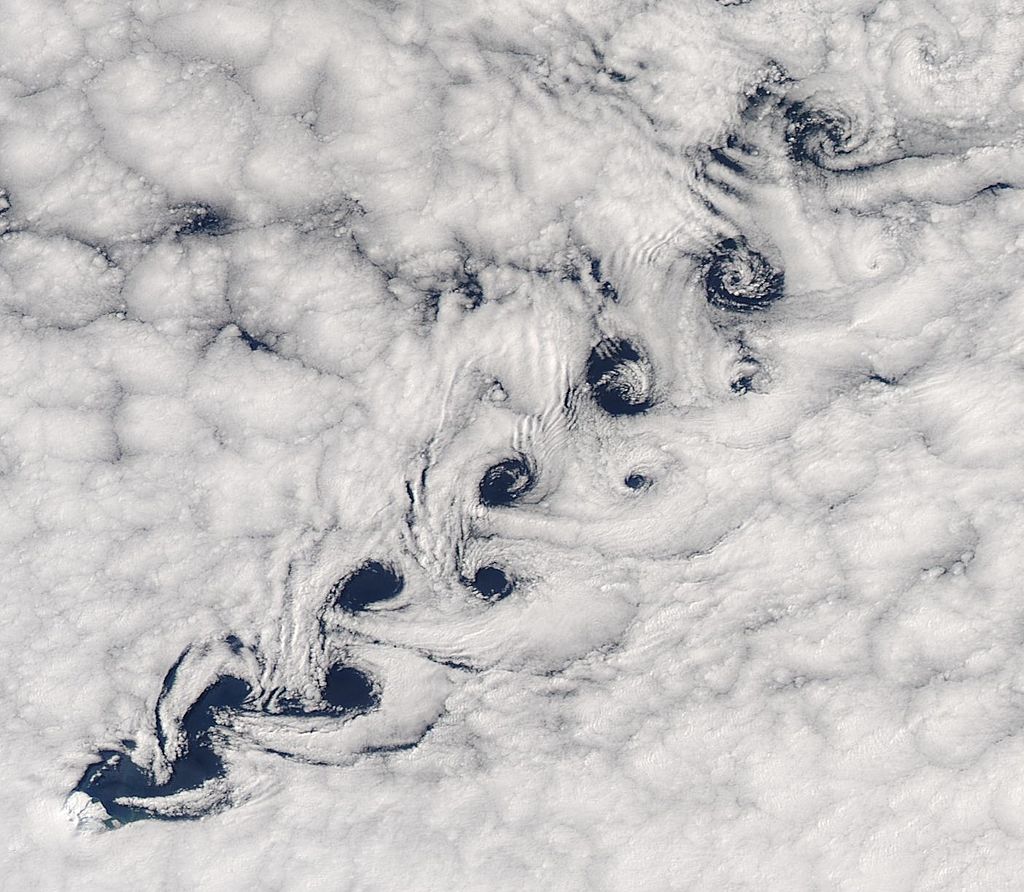
The Strouhal number is a dimensionless number used in fluid dynamics to describe oscillating flow behavior. It is especially important for vortex shedding behind bluff bodies such as cylinders, bridge cables, chimneys, towers, and other structures exposed to flow.
In practical engineering, the Strouhal number helps connect flow velocity, object size, and oscillation frequency. This makes it useful for studying vortex-induced vibration, aerodynamic noise, wake patterns, and resonance risks.
Strouhal Number Formula
The Strouhal number is calculated as:
where:
- St = Strouhal number, dimensionless
- f = vortex shedding frequency (Hz)
- L = characteristic length (m), such as cylinder diameter
- V = free-stream flow velocity (m/s)
Vortex Shedding Frequency Formula
If the Strouhal number is known, the formula can also be rearranged to estimate vortex shedding frequency:
This is useful when estimating the shedding frequency of flow around a cylinder, cable, mast, chimney, or other bluff body.
How to Use the Calculator
- Enter the vortex shedding frequency in Hz.
- Enter the characteristic length in meters.
- Enter the free-stream velocity in m/s.
- Click calculate to get the Strouhal number and shedding period.
- Compare the result with typical Strouhal number ranges for your geometry.
Example Calculation
Consider a circular cylinder in airflow with:
- Vortex shedding frequency: f = 50 Hz
- Cylinder diameter: L = 0.05 m
- Free-stream velocity: V = 10 m/s
Substitute into the formula:
The vortex shedding period is:
A result near 0.2 is commonly associated with vortex shedding from circular cylinders over a broad range of Reynolds numbers, although the exact value depends on geometry, Reynolds number, surface condition, and flow conditions.
Typical Strouhal Number Ranges
| Geometry or Flow Case | Typical Strouhal Number |
|---|---|
| Circular cylinder, many engineering cases | ≈ 0.18 – 0.22 |
| Bluff bodies and rectangular sections | ≈ 0.1 – 0.3 |
| Oscillating biological propulsion | Often ≈ 0.2 – 0.4 |
| Highly geometry-dependent wakes | Can fall outside common ranges |
Why the Strouhal Number Matters
- Predicts vortex shedding frequency from flow velocity and object size.
- Helps assess flow-induced vibration risk.
- Supports bridge, tower, chimney, mast, and offshore-structure design checks.
- Helps compare wind tunnel results, CFD simulations, and experimental data.
- Provides insight into aerodynamic noise and wake oscillation behavior.
Important Assumptions
- The object has a clear characteristic length.
- The flow velocity is known and approximately uniform upstream.
- The shedding frequency is representative of the dominant vortex shedding mode.
- The result depends on geometry, Reynolds number, surface roughness, blockage, turbulence, and nearby boundaries.
Frequently Asked Questions
What does the Strouhal number represent?
It represents the relationship between oscillation frequency, characteristic length, and flow velocity. It is often used to describe vortex shedding and unsteady wake behavior.
What is the Strouhal number for a circular cylinder?
A common engineering estimate for a circular cylinder is around 0.2, but the exact value depends on Reynolds number, surface roughness, turbulence, and flow conditions.
How do I calculate vortex shedding frequency?
Rearrange the formula as f = StV/L. If you know the Strouhal number, flow velocity, and characteristic length, you can estimate the shedding frequency.
What is characteristic length?
Characteristic length is the representative object size used in the calculation. For a circular cylinder, it is usually the diameter. For other shapes, it depends on the geometry and flow direction.
Can this calculator be used for CFD validation?
Yes. The Strouhal number is often used to compare CFD vortex shedding frequency with experiments or reference data, especially for bluff-body wake simulations.
Can the Strouhal number predict resonance?
It can help estimate the forcing frequency from vortex shedding. To assess resonance, compare that frequency with the natural frequency of the structure and account for damping and structural response.
References
- Munson, Young, Okiishi — Fundamentals of Fluid Mechanics
- White — Fluid Mechanics
- Fox & McDonald — Introduction to Fluid Mechanics
- Blevins — Flow-Induced Vibration